ISTE Orlando 2026: The Tools I’m Bringing Home to STEAM Families (And Why This Conference Felt Different)
I just got back from ISTE Orlando 2026, and I keep coming back to the same thought: this wasn’t just another conference. ISTE brought the tools to truly support learning and the valuable conversations we all needed to be part of as future-forward educators and parents.
If you’ve followed along with me here or on Instagram, you already know I’ve been counting down to ISTE Orlando 2026. I went into this conference looking to identify tools and ideas that deserve a place in our learning spaces. I came home with sixteen+ tools worth talking about and identified one big overarching theme we can no longer ignore. Read on!
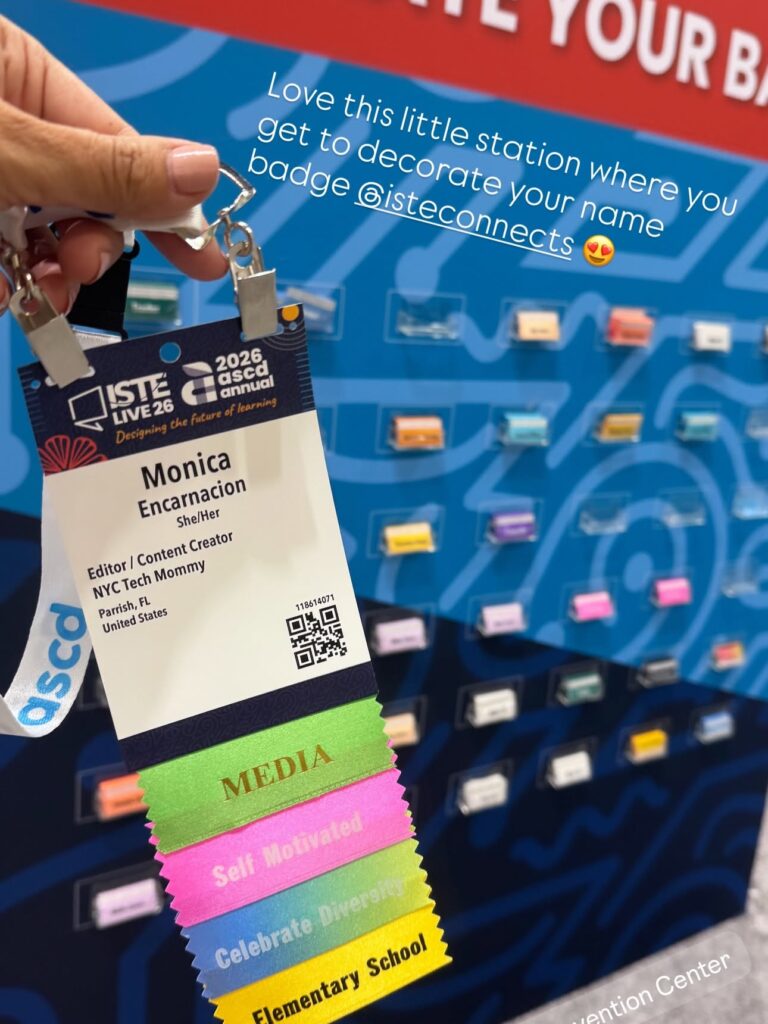

Let’s start with the theme, because it matters more than any single product on this list.
A New Name, and a Question Everyone Is Finally Asking Out Loud at ISTE Orlando
I already told you about the big moment from the opening keynote in my Day 1 recap — ISTE+ASCD officially becoming the International Society for Transforming Education. Richard Culatta said it best from the mainstage: “Education is at an inflection point.” As an education founder myself, I feel this!
But here’s what I didn’t expect: that same “inflection point” energy showed up in literally every AI conversation I had for the rest of the week. Last year, so much of the AI conversation in education was still stuck on should we. This year, the question has been upgraded. It is now how do we do this well — and honestly, as a mom and innovative educator, that’s the version of this conversation I’ve been waiting for.
What “Doing AI Well” Actually Looks Like
Here’s what stood out to me, tool after tool: the products that impressed me most didn’t lead with what AI could do. They led with the guardrails.

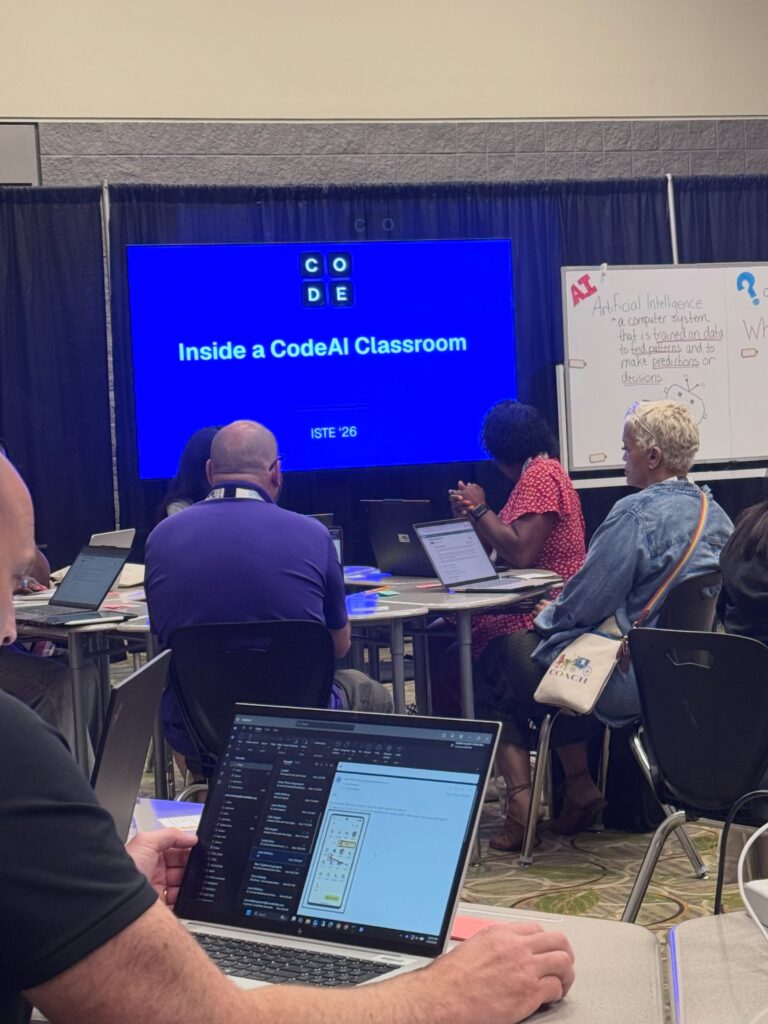

CodeAI — yes, Code.org is now CodeAI, with 150 million students and 2 billion-plus hours of learning behind it — built a whole workshop around a framework I haven’t stopped thinking about: Pilot, Co-Pilot, Autopilot. The idea is simple: no matter how much AI helps with the work, your kid is always the pilot. They make the decisions. They set the parameters. They stay responsible for the output.
Khan Academy’s Khanmigo takes a different but equally thoughtful approach. It’s not an open chatbot — it’s a Socratic tutor. It asks guiding questions instead of handing over answers, and every single conversation is visible to parents and teachers—nothing hidden.
Even the hardware told this story. LEGO Education’s brand-new Computer Science & AI kit was built with privacy as a first principle, not a footnote.


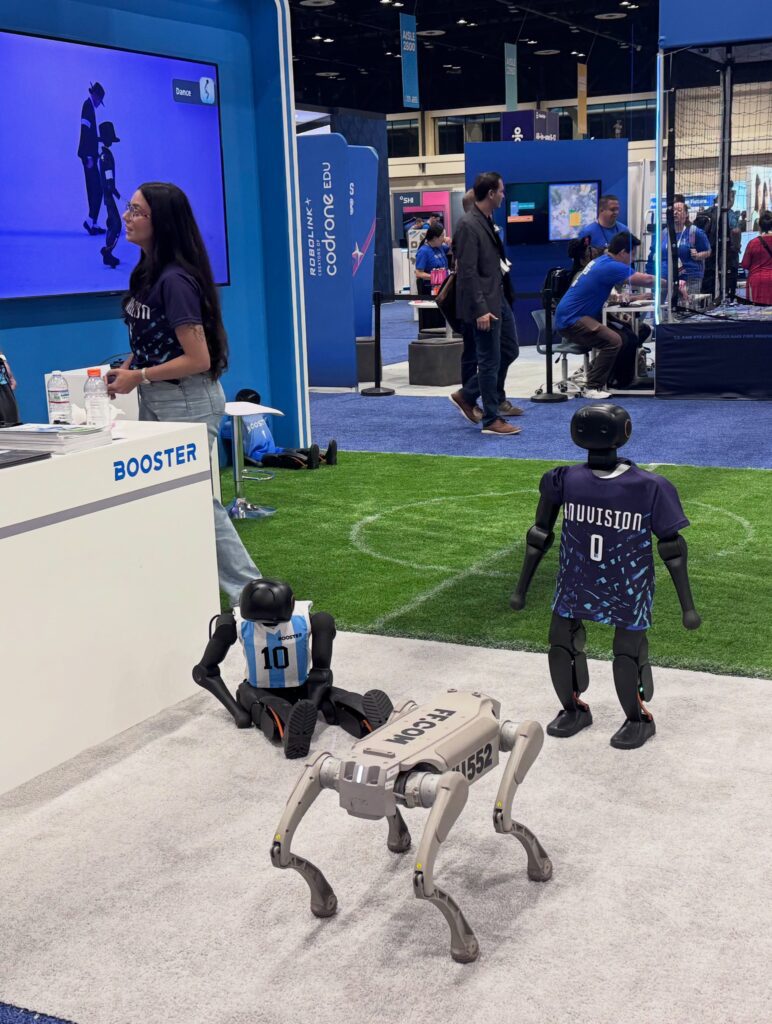
And CoDrone EDU answered the exact questions I’d ask before letting a drone anywhere near my kids: no FAA certification required, no cameras, no student logins, COPPA and FERPA compliant, and every drone arrives pre-built with prop guards.
That’s the throughline I’m bringing home from Orlando: AI belongs in our kids’ learning when it’s built to support their judgment, not replace it — and when we as parents and teachers can actually see what’s happening inside it. That’s how we move learning forward and help our kids prepare for the technology we can no longer afford to ignore!
Okay. Now for the fun part.
ISTE Orlando 2026 – The Tools I’m Actually Excited About
🤖 Coding & Robotics
- Ozobot’s Ari (grades 3–8) — Ozobot‘s whole philosophy is that every kid deserves a real first moment with code, and Ari is proof of it. Kids start with Color Codes on paper and work all the way up to real Python, no device or login required to begin.
- LEGO Education’s new CS & AI Kit — 90+ standards-aligned lessons for K–8, block-based coding, and AI literacy built with kid privacy at the core.
- CodeMonkey — game-based coding for kids who’d rather build a game than sit through a lesson about one. Block-based through PreK–2, all the way to Python by grade 6+.
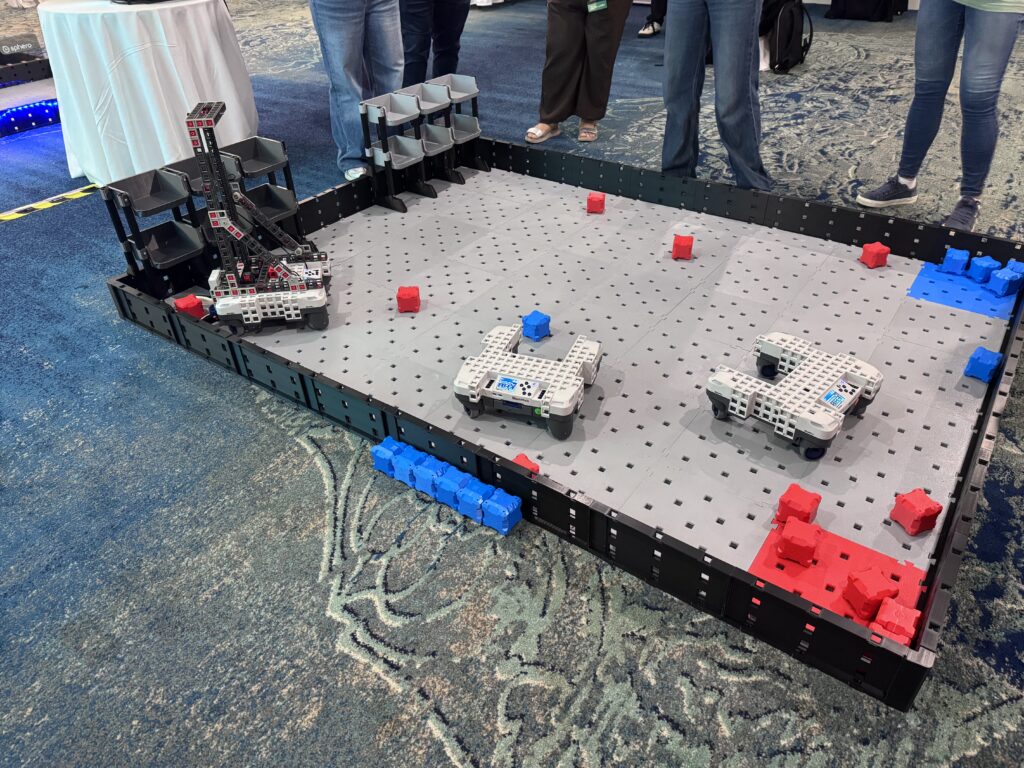
- Sphero + TEAM Alliance — robotics missions and competitions– screen-free coding, physical sequencing, pattern recognition, and design thinking Sphero competitions for kids under age 9 and python programming, engineering, fully autonomous, and more by high school. Any adult can coach. No robotics background needed — that’s the best part!
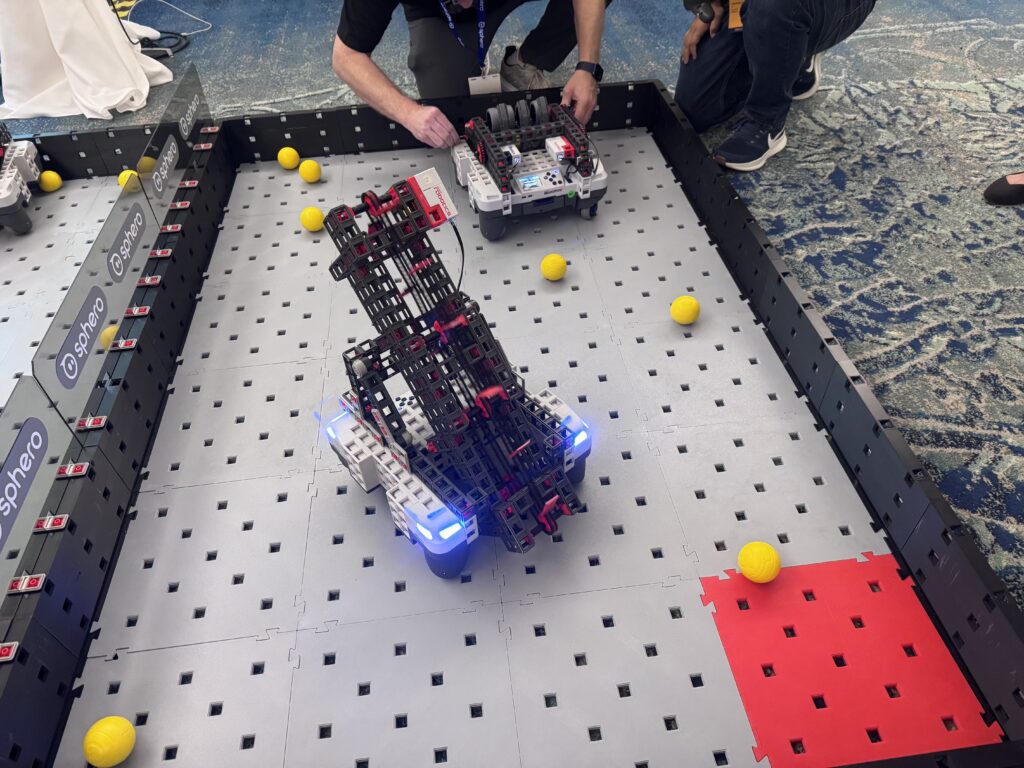
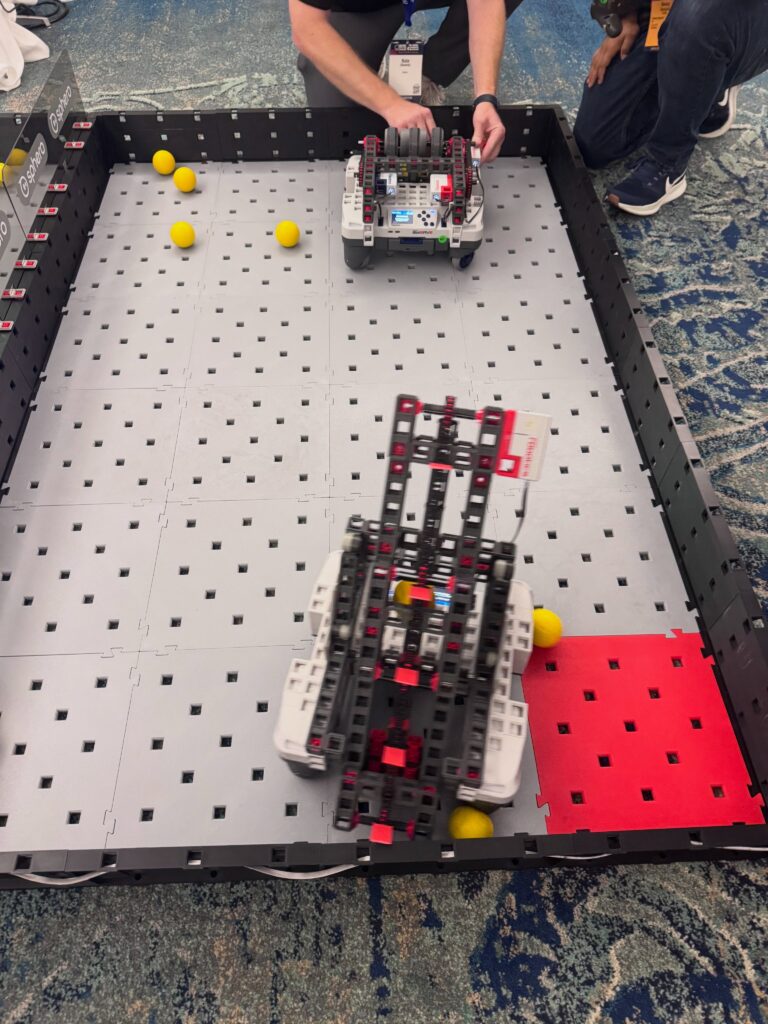
- CoDrone EDU (Robolink) — classroom-safe drones and the official partner behind the REC Foundation’s Aerial Drone Competition.
- VEX Robotics — their CS Continuum (123 → GO → AIM → IQ→EXP→V5→ CTE → AIR) is one of the smartest things I saw all week. Your kid never has to start over as they grow.
🧠 AI Learning Tools
- CodeAI (formerly Code.org) — AI literacy layered onto CS fundamentals millions of families already trust, anchored by that Pilot/Co-Pilot/Autopilot framework.
- Khan Academy’s Khanmigo — a Socratic AI tutor that guides instead of answers, fully visible to parents and teachers.
- BrainPOP — Tim and Moby are still going strong, now with a brand-new AI Literacy Collection.
🎨 Creative & 3D Design
- 3Dux|Design — an architectural modeling system made from cardboard and connectors that work with whatever cardboard you already have at home. Research-backed gains in math, science, and confidence.
- 3Doodler Start+ (ages 6–13) and SCRIB3D (ages 14+) — 3D printing pens for every age, from “draw in the air” beginner fun to genuinely intricate, detailed work.


- MindFrames from Wobbleworks — wearable, click-together geometric shapes. Crowns, wings, glasses — whatever their imagination wants to build.
- Chibitronics — paper circuits. Kids design a working LED circuit for their own art or card using a free tool, then bring it to life for real. My art-loving, “I’m not a STEM kid” kids would fall hard for this one.
📚 School & Family Connections
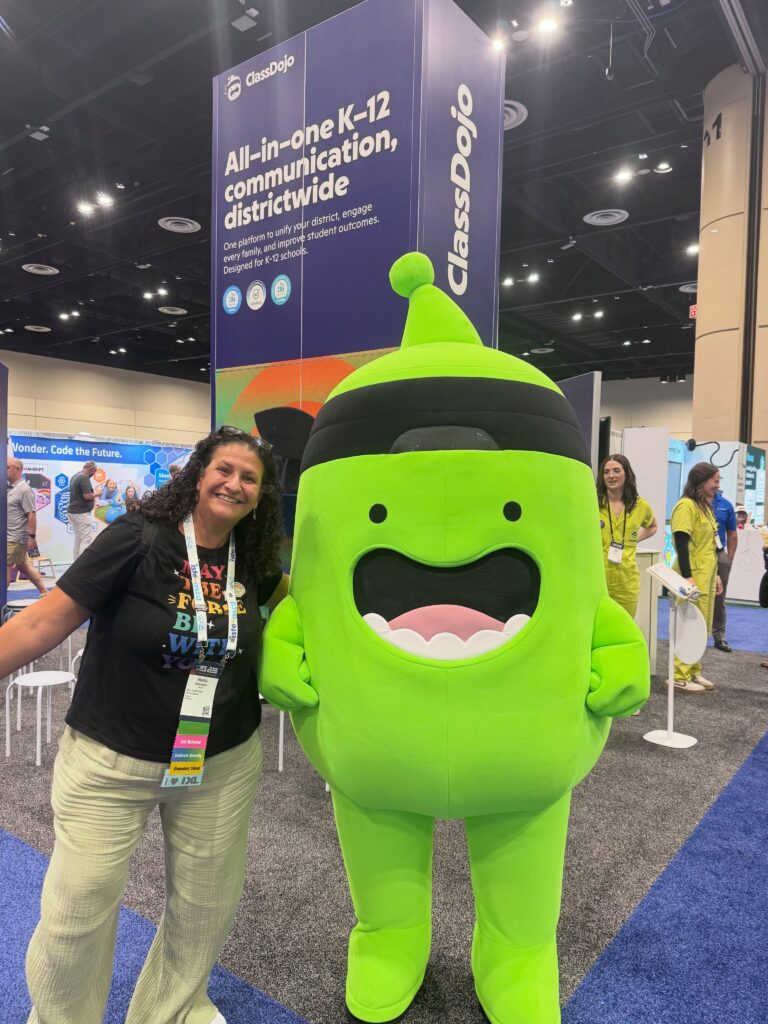
- ClassDojo & Dojo Tutor — ClassDojo now automatically translates into 190+ languages and connects 45 million+ families and teachers. Dojo Tutor adds personalized 1:1 online tutoring in short 25-minute sessions.
ISTE Exclusive: Free Pokémon Club
Save this one — the clock is ticking. Pokémon is launching a free, ready-to-run Pokémon Club for schools, libraries, and afterschool programs this August, and it’s backed by real research: a 2011 Columbia University study found trading card games like the Pokémon TCG build strategic thinking, math and reading comprehension, communication, empathy, and teamwork.
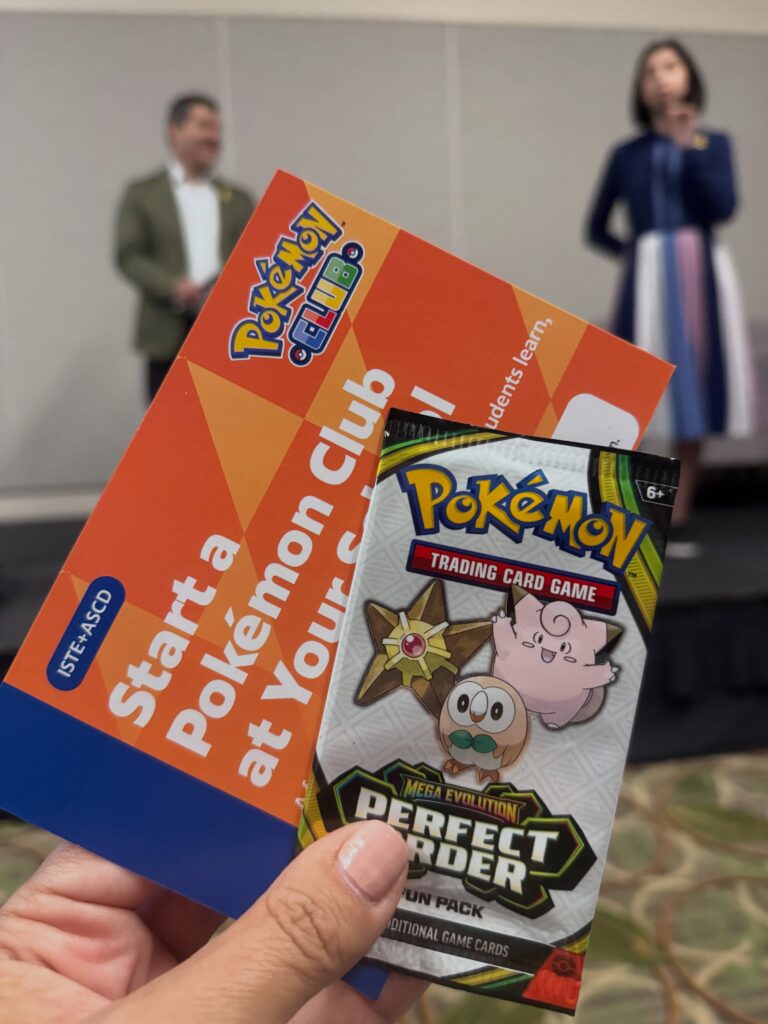

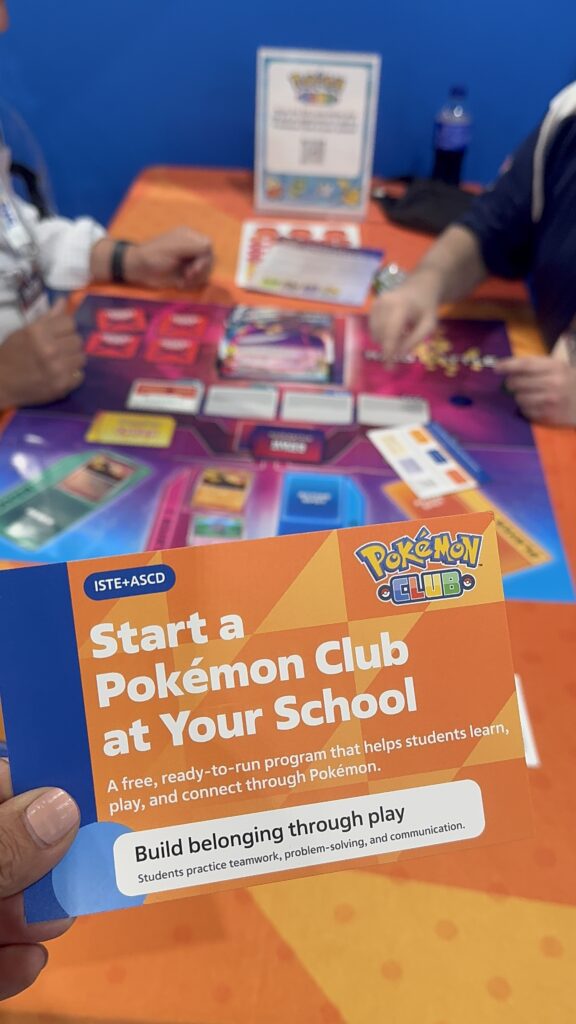
ISTE+ASCD members can apply early, but the window closes July 7, 2026. If your homeschool co-op or community group has ISTE+ASCD membership, don’t sit on this one. If you attended ISTE Orlando 2026, don’t forget to apply!
What I’m Taking Home
It’s not any single tool that’s stuck with me. It’s the message. This year, at a conference whose own organization renamed itself mid-keynote to reflect the scale of change underway, the question everyone in that room was actually wrestling with was how do we do this well — not should we.
For families, that’s genuinely good news. It means the tools emerging from this EdTech space right now are being built with greater scrutiny, not less. More attention to privacy. More attention to what our kids actually need to understand, not just consume. That’s the filter I used for every single tool on this list, and it’s the one I’ll keep using.
If you try any of these with your family, I want to hear about it. Drop a comment, or find me on Instagram — I’m always up for talking EdTech tools that make sense for learning.
The future of education is being built right now, and I’m so glad I get to bring you along for it!
A quick note on how this post came together: I just shared about kids being the pilots when they work with AI, and I want to be upfront with you. I used AI to help write this post — but every thought, opinion, photo, and piece of research here is mine. I did the work at ISTE, formed my own opinions, and used AI to help me organize my notes, sort everything into categories, and edit it all into the post you just read. We’re designing tomorrow’s education right now, and pretending AI isn’t part of that doesn’t serve any of us. The real question is how we use it safely and thoughtfully — and how we model that for our kids. I stayed in the pilot’s seat. I hope you will too!